Condition-based
Rotating-electrode chlorine measurement unit
No fixed interval
No membrane or reagent is used. Inspect and clean the electrode and measuring cell when diagnostics indicate an issue.
Rather than repeating product models, this page explains how Waterbee manages fouling and bubbles, defines maintenance lifecycles, and validates connected control and AI for dependable operation.
Rotating electrodes and serviceable flow paths help reduce field fouling.
90° scattered-light detection and a bubble-reduction stage support low-range turbidity.
Fixed replacement and condition-based inspection are clearly separated.
ESP32-S3 Wi-Fi, BLE and explainable edge analytics are under validation.
Product pages provide model specifications and configurations; this page explains measurement principles and field advantages.
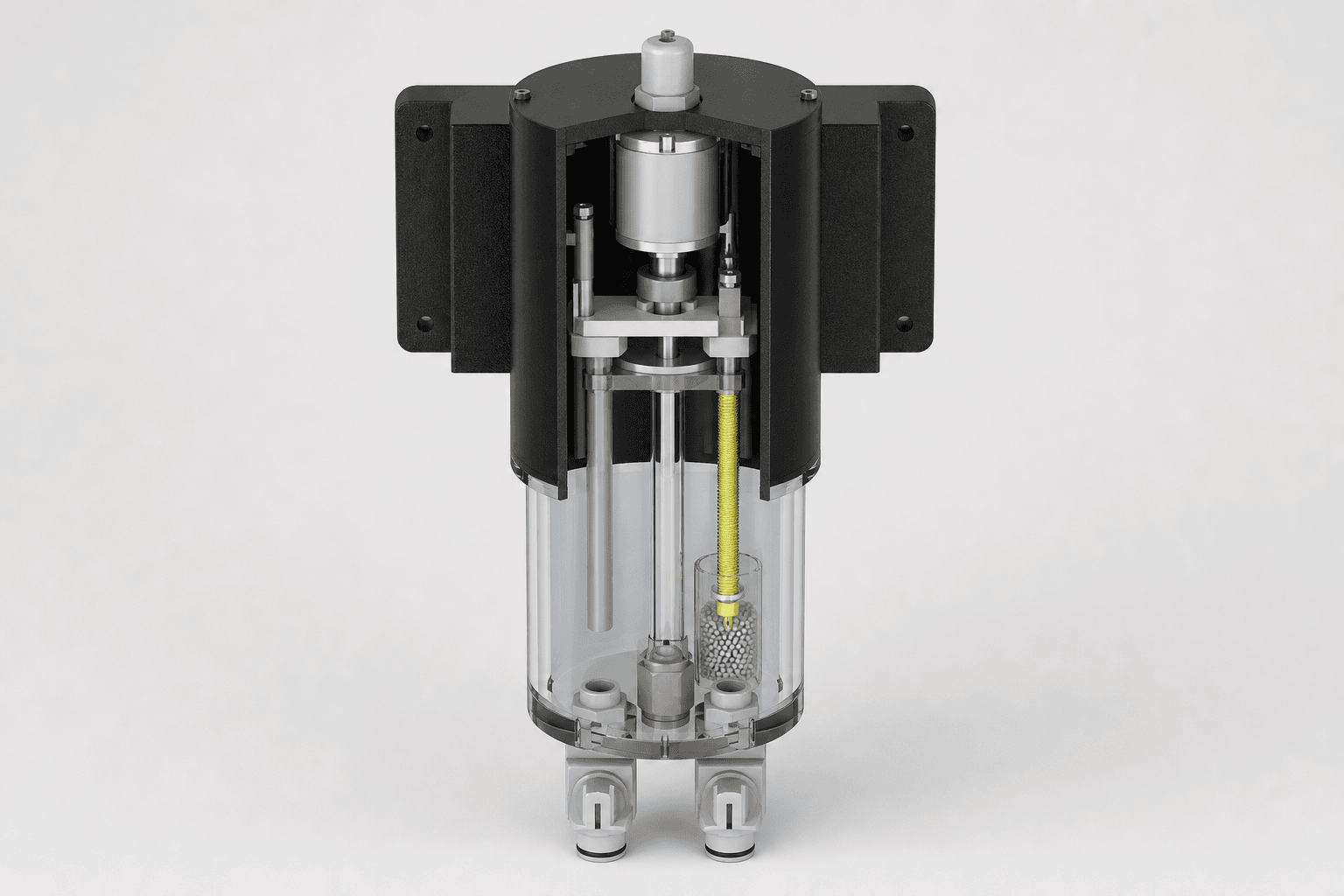
The electrode rotates during measurement to help limit surface fouling. There is no fixed-cycle membrane or reagent; the electrode and measuring cell are inspected and cleaned in response to diagnostics.
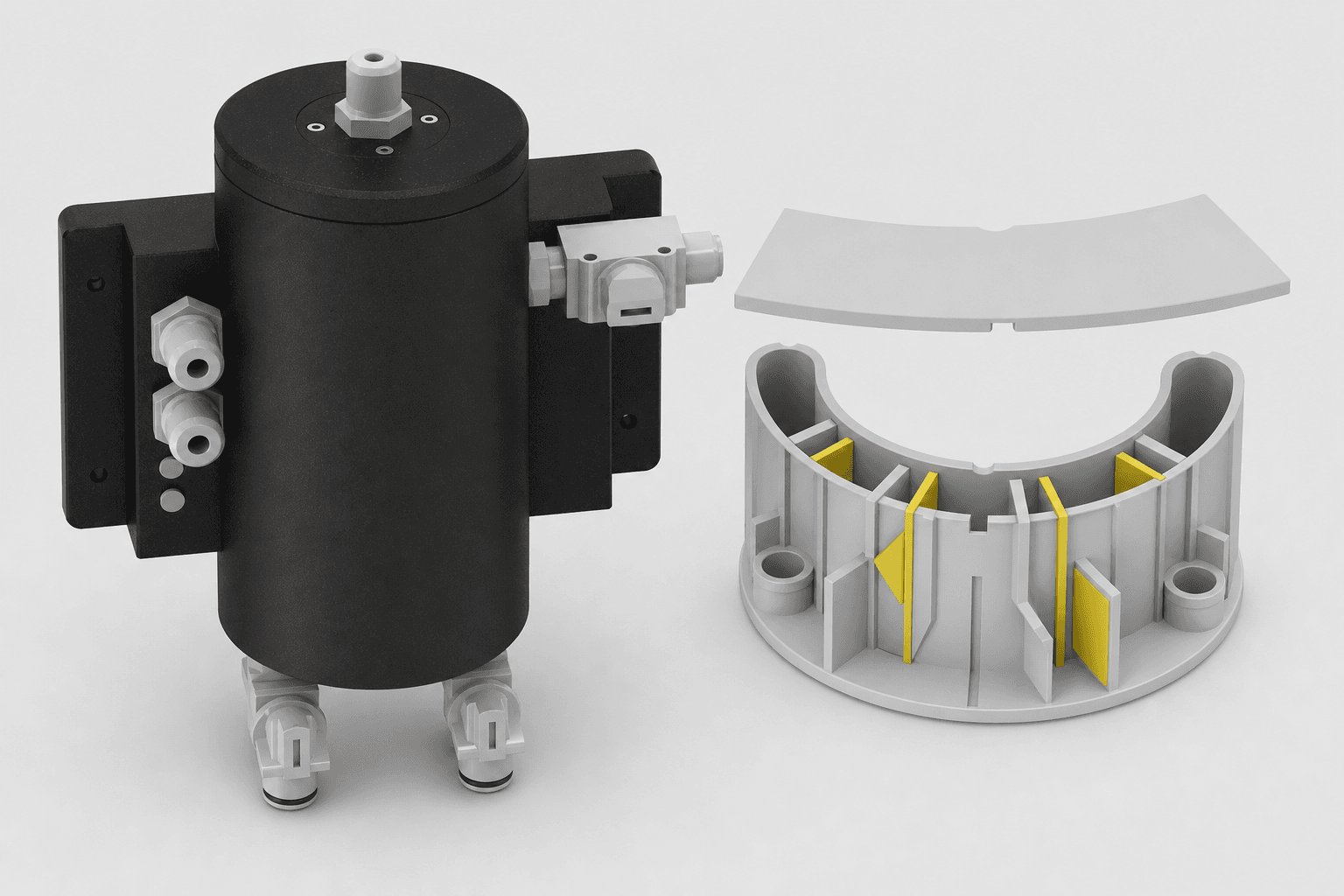
A tungsten lamp and 90° scattered-light detector are paired with a detachable bubble-reduction stage ahead of the flow cell. The architecture is designed to reduce bubble interference in low-range monitoring at treatment plants and clearwells.
Components with a recommended replacement interval are separated from condition-based items. Actual life varies with sample quality, flow, operating hours, cleaning and installation.
No membrane or reagent is used. Inspect and clean the electrode and measuring cell when diagnostics indicate an issue.
Check light output and diagnostics; the lamp is user-replaceable.
Contact Waterbee for inspection if detector performance is in question.
Replace immediately if the glass electrode breaks; monthly calibration is recommended.
Inspect contamination and measurement offset, then clean and calibrate before deciding on replacement.
Use differential pressure, upstream/downstream water quality and operating history to decide replacement timing.
These are maintenance recommendations, not warranted service-life values. Site conditions and the latest product manual take precedence.
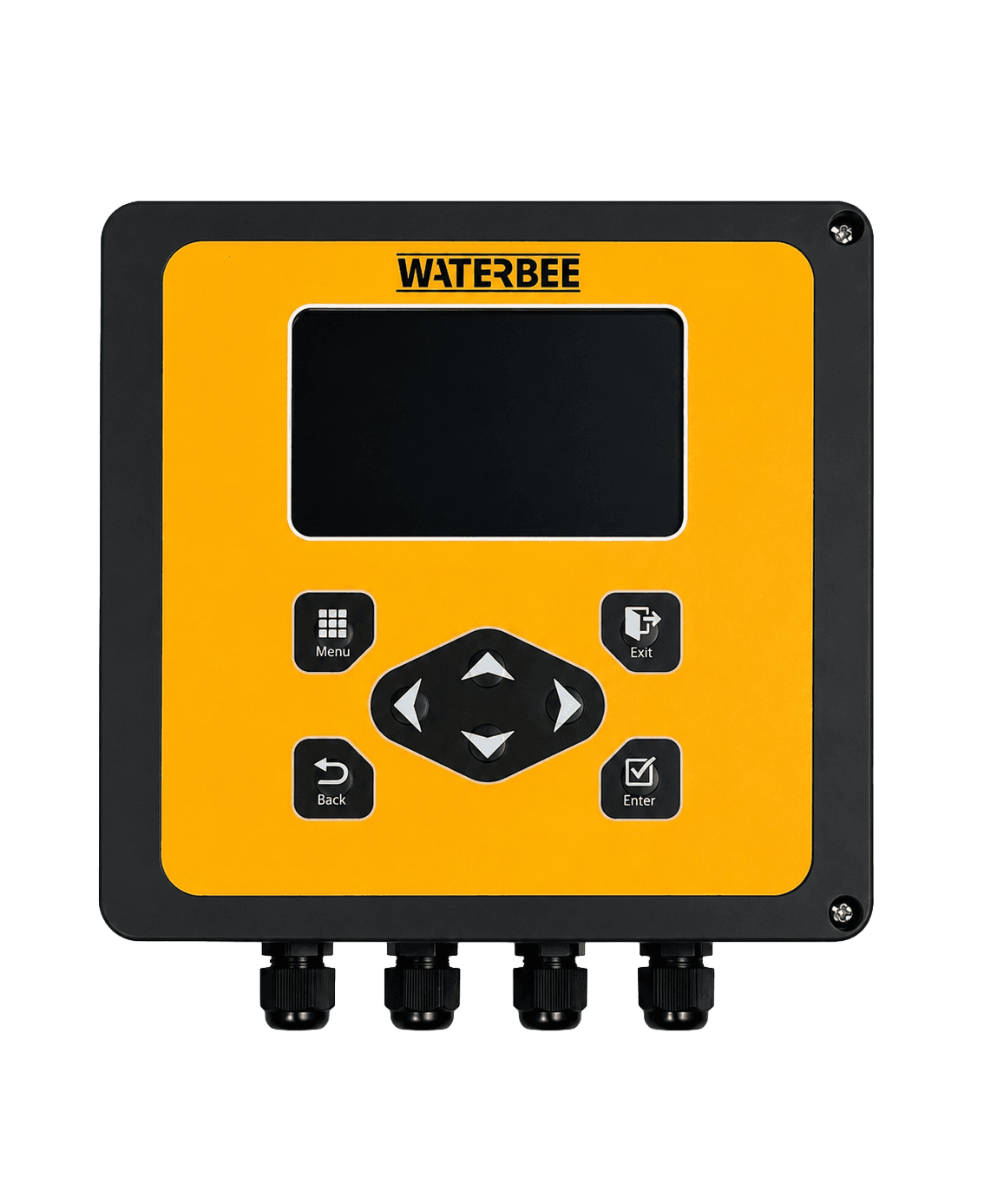
The shipping WBSC10 and the ESP32-S3 controller under development are presented separately. Development features will be finalized only after EVT and field validation.
The current product focuses on local display, calibration, recording and integration with conventional plant controls.
The next-generation architecture is being developed to add wireless setup and remote status visibility while retaining conventional field signals.
Initial setup, local inspection and service connection
Local web interface and status/measurement telemetry
4–20 mA, RS-485, relay and PLC signal integration
Final specifications follow RF, concurrent communication, load and noise testing
Development concept using the actual WBSC10 enclosure to show connectivity functions only.
Waterbee is developing explainable lightweight analytics for abnormal water-quality signals and sensor drift. Training and validation run on a server, while the ESP32 performs risk-score inference only.
Screen missing, stuck, out-of-range and simultaneous abnormal values first.
Apply explainable statistics such as Hampel, MAD, EWMA and CUSUM.
Deploy a validated shallow model to calculate a field risk score on the ESP32.
A separate state machine enforces relay limits and recovery conditions.
Validation starts in shadow mode with no control authority. Only functions with demonstrated reproducibility and acceptable false-alarm behavior advance in stages.